
Pregnancy
.
Your pregnancy in good hands
.
Pregnancy transforms every structure of the body: posture, muscles, the pelvic floor and circulation. It is a natural and powerful process. But that does not mean you have to cope with everything it brings without support.
Physiotherapy during pregnancy is not a luxury. It is a tool to help make these months more comfortable, to prepare you for a more informed and confident birth experience, and to give you the best possible starting point for your postpartum recovery.
.
Your body is doing something extraordinary. It deserves extraordinary support.
.
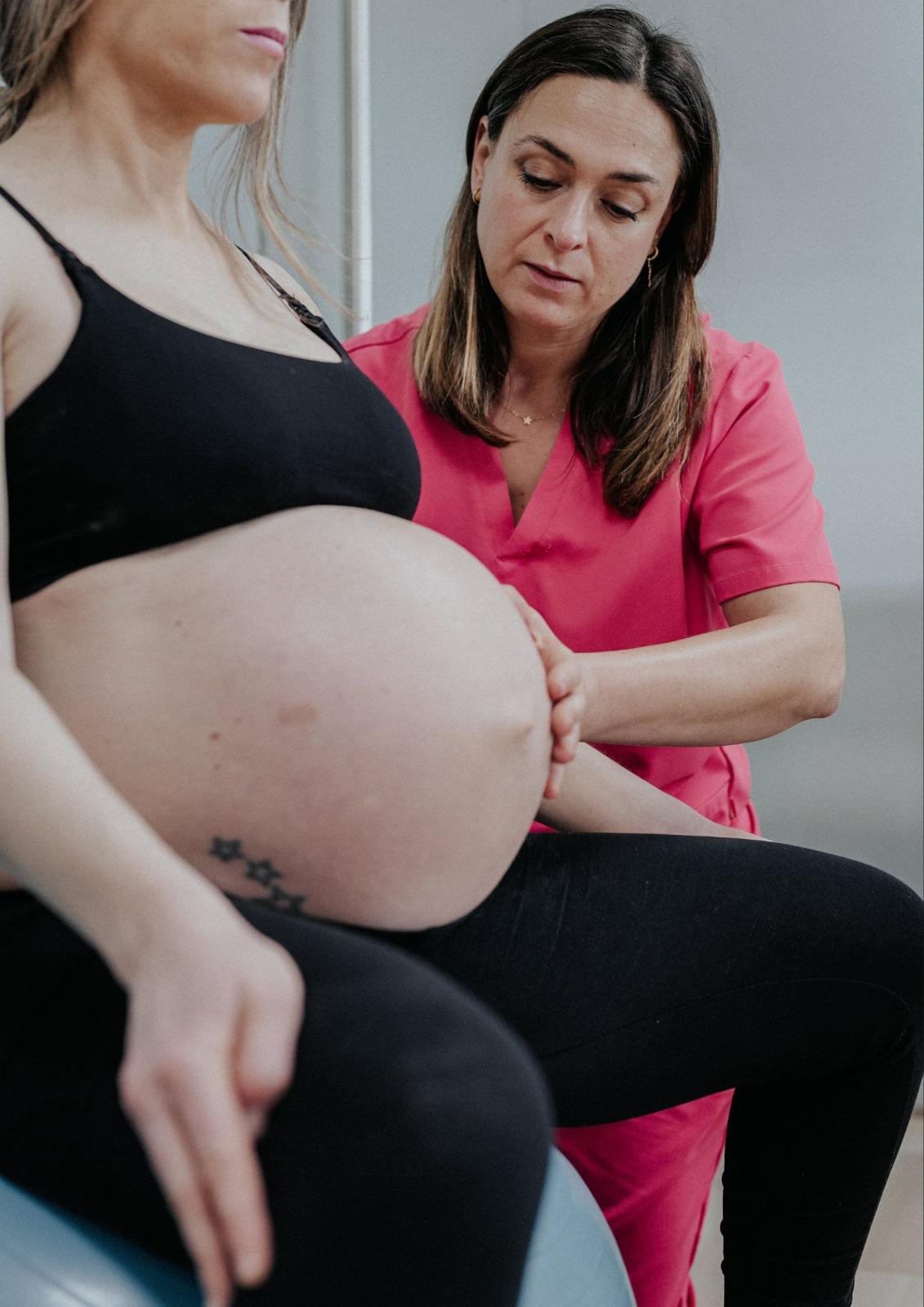
- Assessment and preparation of both the perineum and the birth canal
- Perineal massage to improve tissue flexibility in preparation for labour and delivery
- Neck pain and cervicobrachial pain
- Muscle tension and contractures
- Swelling (oedema) in the legs and feet
- Lower back pain and sciatica-related pain
- Plantar fasciitis
You have just given birth. Your body has achieved something extraordinary. And now another equally important stage begins: recovery.
In the immediate postpartum period, most women focus entirely on their baby and forget about themselves. That is completely understandable. But taking care of your body after childbirth is not selfish — it is the foundation for everything that comes next.
We can help with:
- Comprehensive assessment of the pelvic floor and abdominal wall
- Scar treatment — caesarean section scars, perineal tears and episiotomy scars — to prevent adhesions and tissue restriction
- Diastasis recti — when the abdominal muscles do not return to their normal position and the abdominal wall loses stability and function
- Urinary and faecal incontinence
- Dyspareunia — pain when resuming sexual intercourse
- Dysmenorrhoea — painful periods
- Mastitis — inflammation of the breast tissue, with or without infection
Any type of leakage of urine, stool and/or gas — even if it is minor and only happens occasionally — is a sign that something within the pelvic floor system requires attention. It is not something you should accept as normal because you have given birth. Nor is it something that will simply “go away with time”.
It can be treated. And the sooner treatment begins, the better the outcome is likely to be.
A prolapse occurs when the ligaments and muscles that support the pelvic organs lose strength, causing one or more organs to descend. It may be experienced as a sensation of pressure, a bulge, or heaviness in the vaginal or rectal area.
- Cystocele — bladder prolapse
- Enterocele — small bowel prolapse
- Hysterocele (uterine prolapse) — prolapse of the uterus
- Rectocele — rectal prolapse
These are treatable conditions. Pelvic floor physiotherapy can significantly improve symptoms and, in many cases, help avoid the need for surgery.
- Constipation
- Fissures
- Haemorrhoids
.
.